Month: July 2010

  • Secret treasure in the F&M Orient

    Secret treasure in the F&M Orient

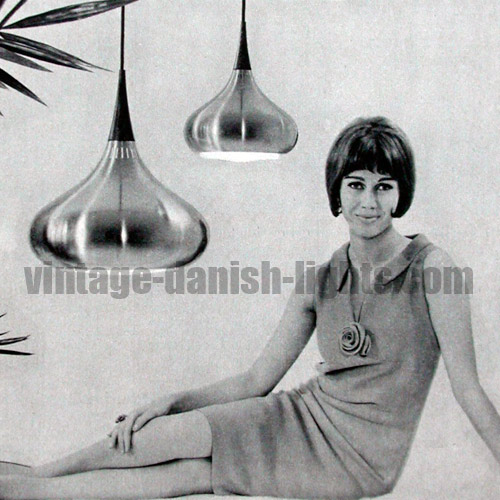
    Few people know that when Jo Hammerborg‘s Orient pendant light first appeared on the market in the early 1960s, the range included a version of the Orient Minor (far left in the picture below) made of solid sterling silver and retailing at more than 10 times the price of other lamps in the line.
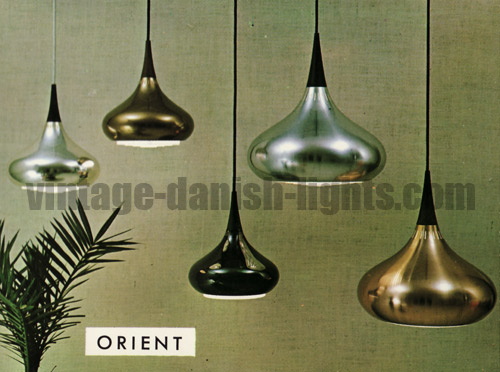
    Jo Hammerborg Fog and Morup Orient

    An April 1963 Fog & Morup catalogue lists the complete Orient range with prices in Danish kroner (Dkr), US dollars (USD) and UK pounds (GBP in pounds, shillings and pence) as follows:

    Orient Minor (diameter 22.5cm, height 25cm)
    E 2358/40 Copper Dkr 84.00 USD 12.25 GBP 4.7.0
    E 2360/80 Aluminium Dkr 65.25 USD 9.45 GBP 3.7.6
    E 2360/84 Anodised brown Dkr 71.50 USD 10.35 GBP 3.15.0
    E 2360/85 Anodised slate Dkr 71.50 USD 10.35 GBP 3.15.0
    E 2363 Sterling silver Dkr 866.00 USD 125.70 GBP 44.15.0
    Orient Major (diameter 38cm, height 34cm)
    E 2359/40 Copper Dkr 134.50 USD 19.50 GBP 6.19.6
    E 2361/80 Aluminium Dkr 84.00 USD 12.25 GBP 4.7.0
    E 2361/84 Anodised brown Price not given
    E 2361/85 Anodised slate Price not given

    Jo Hammerborg Fog and Morup Orient

    There is, however, no sign of either the sterling silver or the anodised metal variants in a 1965 advertisement for the Orient (pictured above), and no mention of them in any subsequent F&M catalogues or advertisements in our possession. While the copper and aluminium versions of the Orient remained in production in both Major and Minor sizes until at least 1974, the anodised metal and solid silver editions never appeared again.

  • The spiral that isn’t a Lyfa Weisdorf

    The spiral that isn’t a Lyfa Weisdorf

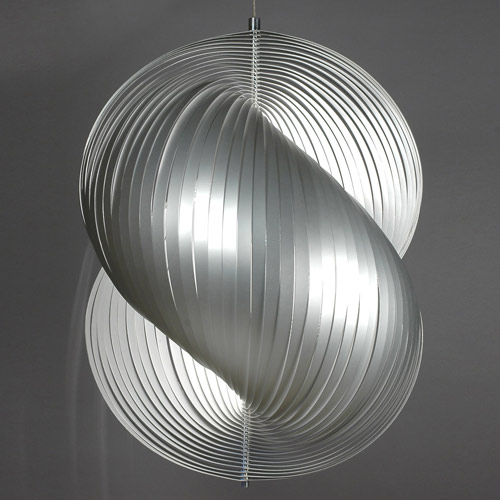
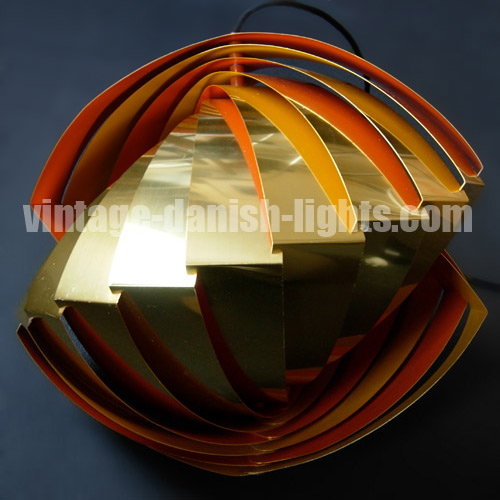
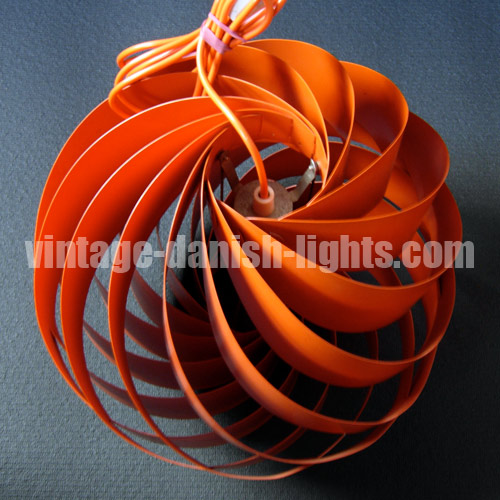
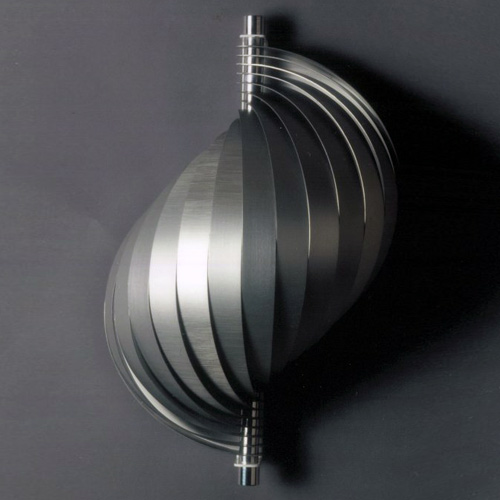
    From time to time we see one or other of the two spiral-structured lamps pictured below being attributed to Louis Weisdorf for Lyfa. Usually in these cases no title is given for the light, but occasionally it is claimed to be a Konkylie or a Turbo.

    Henri Mathieu Lubéron Applique Apt

    Henri Mathieu Lubéron Ventoux

    In fact, neither of the lights was designed by Louis Weisdorf or produced by Lyfa. Both lights are the work of French designer Henri Mathieu. Dating from 1970/71 and back in production today, the pair are part of the collection Lubéron and are entitled Applique Apt and Ventoux respectively. Weisdorf’s Konkylie and Turbo are pictured below for comparison, the former being most easily distinguished from the Mathieu pair by its sharp angles.

    Louis Weisdorf Lyfa Konkylie

    Louis Weisdorf Lyfa Turbo

  • Jo Hammerborg’s earliest F&M designs

    Jo Hammerborg’s earliest F&M designs

    When Jo Hammerborg joined Fog & Mørup in 1957 he lost no time in transforming the company’s product range and bringing it firmly into the modern age. Out went the cumbersome chandeliers with their glass shades resembling fried eggs, and in came a swathe of sleek, minimal and modern designs that were produced to the highest possible standards of quality.

    Jo Hammerborg Fog Morup Corona

    By as early as April 1963 the company’s catalogue of 40 different lines included 24 designs by Hammerborg himself, every one of which has withstood the harsh test of time and continues to look fresh nearly 50 years on. These are the Corona (pictured above), the Alfa wall light and Beta table lamp, the Club, the Dano, the Eiffel, the Etna (pictured below), the Juno, the Life, the Metro, the Monolit floor lamp, the Nordlys, the Nova, the Orient, the Optica (pictured second below), the Pisa, the Pompei, the Roulet, the Runda, the Saturn, the Studio, the Tunika, the Ultra and the Vasa.

    Jo Hammerborg Fog Morup Etna

    Jo Hammerborg Fog Morup Optica

  • The uniquely Danish concept of hygge

    The uniquely Danish concept of hygge

    From time to time we hear someone in Denmark describing a vintage light – usually one that gives out a warm glow, such as Claus Bolby‘s Veega (pictured below) – as “hygge”, and over the years we have come to understand that to Danish people this word means something culturally specific that is difficult to translate in a single word. “Cosy” or “comfortable” are the translations most often given, but these words don’t convey the whole meaning.

    Claus Bolby Veega wall light

    The 1960s publication Design from Denmark, forerunner of the Design from Scandinavia series, attempts a more comprehensive definition. “A Danish word which you will never be able to translate,” it says, “is hygge. It means ease, comfort and contentment all added together – yet somehow a lot more than that. The recipe includes fun, food, fairy-tales and friendship. How can such a snug little concept fit in with memories of the violent past and with the demands of the modern world? Can a country be both cosy and competent in this bustling century? People here are sure it can – people who work hard to high standards and yet know how to relax and be cosy in their free and easy democracy where you can cycle right past the King’s front door.”

  • Jo Hammerborg’s Sera and Dano lights

    Jo Hammerborg’s Sera and Dano lights

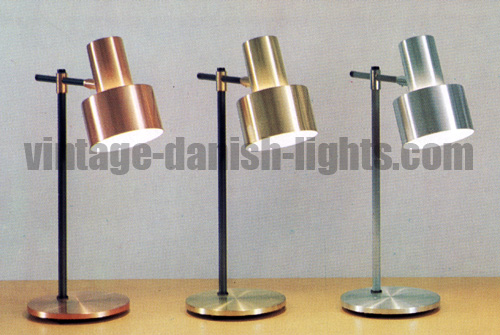
    One of several themes that ran through Jo Hammerborg’s work at Fog & Mørup during the 1960s was that lights were often produced in either two or three different metals/finishes – usually aluminium and copper when just two versions were produced, with brass making up the threesomes.

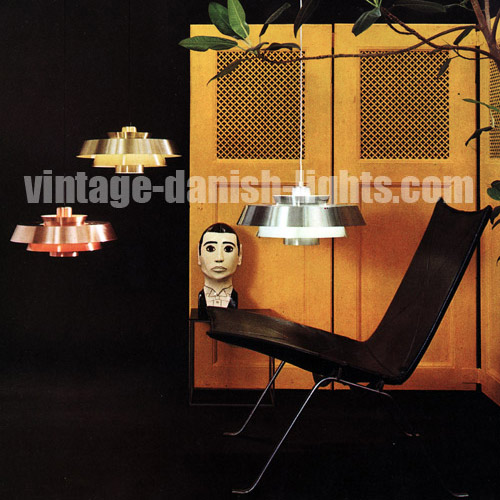
    Fog and Morup Jo Hammerborg Nova light

    Examples include the Nova (above), with three solid metal versions, the Diskos and Lento (below) with three lacquered metal versions, and the Saturn with its two solid metal variants.

    Fog and Morup Jo Hammerborg Lento light

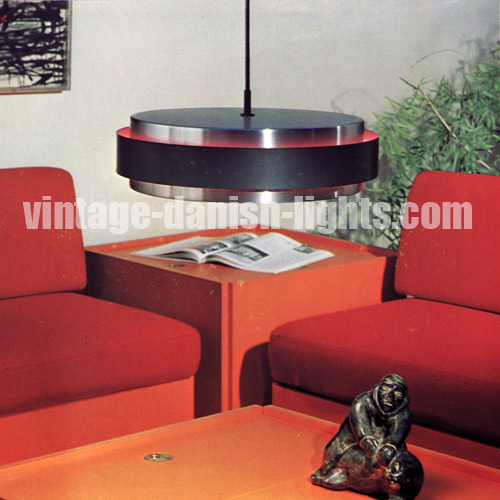
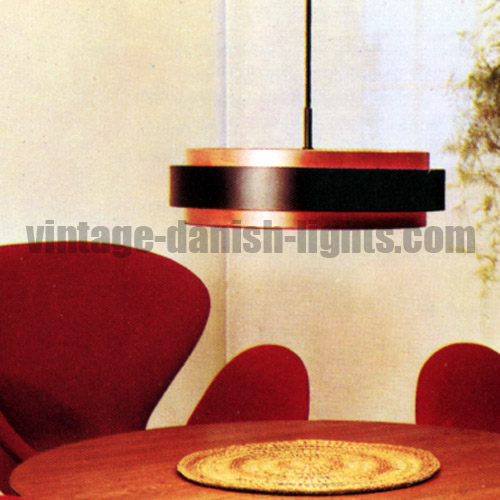
    An apparently strange anomaly in this pattern arises, however, with the circular Sera and Dano lights – which seem as if they too should share a single name. Like their Saturn stablemates, one of the pair (the Sera, pictured below) is aluminium with an encircling band that is dark grey on the outside and cerise inside, while other (the Dano, pictured below the Sera) is copper with a black and orange band. Both Sera and Dano have a diameter of 38cm and a height of 10cm, and in fact they are wider, flatter versions of the 30 x 19cm Saturn.

    Fog and Morup Jo Hammerborg Sera light

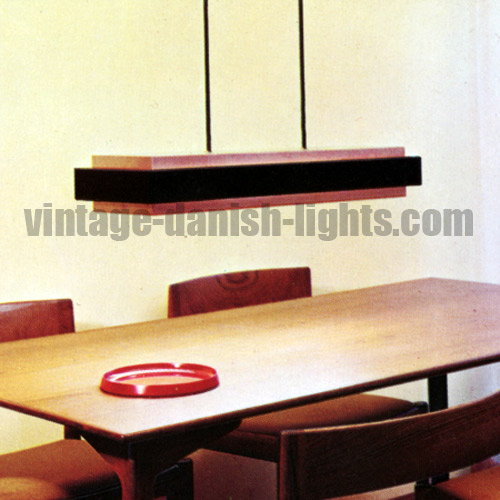
    But while the Sera is an only child, the Dano does in fact have a little-known and rarely seen sister light (pictured bottom) – one that matches it not in shape but in colour. This second Dano is rectangular, measuring 68 x 21.5cm, and is perhaps the reason why the Sera and circular Dano have separate identities.

    Fog and Morup Jo Hammerborg Dano round light

    Fog and Morup Jo Hammerborg Dano square light

  • Jo Hammerborg’s Fog & Mørup Zero light

    Jo Hammerborg’s Fog & Mørup Zero light

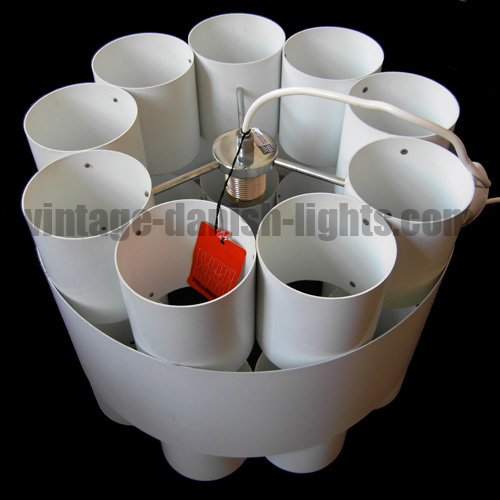
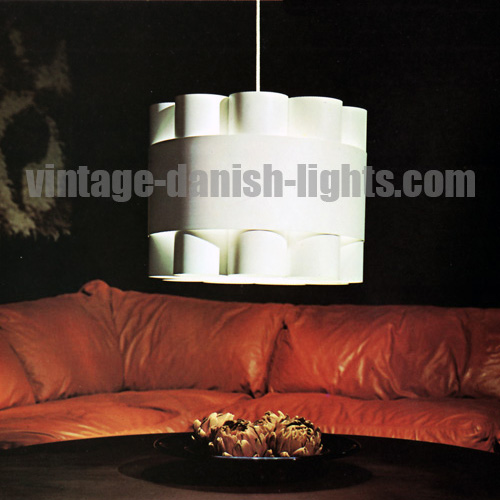
    The multi-cylindrical Zero (pictured below), a classic Jo Hammerborg creation dating from late 1970 or early 1971, is a strong candidate for the title of rarest Fog & Mørup light of the 1960s and 1970s – the “Hammerborg period” that was F&M’s heyday.

    Fog and Morup Jo Hammerborg Zero pendant light

    The huge scale of this scarce and elusive light doesn’t really come over in the original F&M catalogue images (see below), or in a consideration of the lamp’s given dimensions of 40.5cm diameter and 30cm height.

    Fog and Morup Jo Hammerborg Zero pendant light

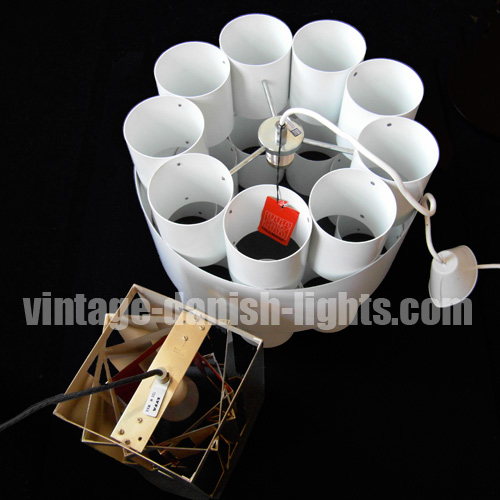
    Indeed, it’s only when the Zero is directly compared side by side with other lights of more standard proportions that its impressive size can be fully appreciated. We have placed it here next to Simon Henningsen’s Lyfa Kassablanka to illustrate the point.

    Fog and Morup Jo Hammerborg Zero with Simon Henningsen Lyfa Kassablanka

  • F&M’s 1970s collaboration with Arabia

    F&M’s 1970s collaboration with Arabia

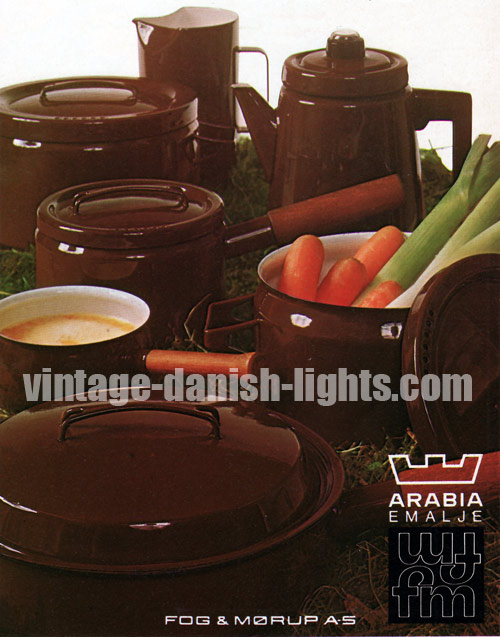
    In the mid-1970s Fog & Mørup made a brief return to its roots in ironmongery when it embarked upon a collaboration with Finnish company Arabia which embraced several lines of enamelled steel kitchenware and lighting. First to appear, in 1973, was the Finella range, pictured below.

    Fog Morup Arabia Finella

    The Finella advertisements included the legend: “She makes big eyes. She believed that Arabia was only glass and porcelain. And now she gets the finest cookware – in wonderful non-fading enamel colours on special steel.” No designers were acknowledged in the advertisement, but the coffee jug at right back is a 1957/58 Antti Nurmesniemi design on permanent display at Helsinki’s Design Museum and New York’s Museum of Modern Art (MoMA). The jug at centre back has been attributed to Kaj Franck, and the book Finnish Design 1875–1975: 100 years of Finnish Industrial Design attributes the pans to Seppo Mallat.

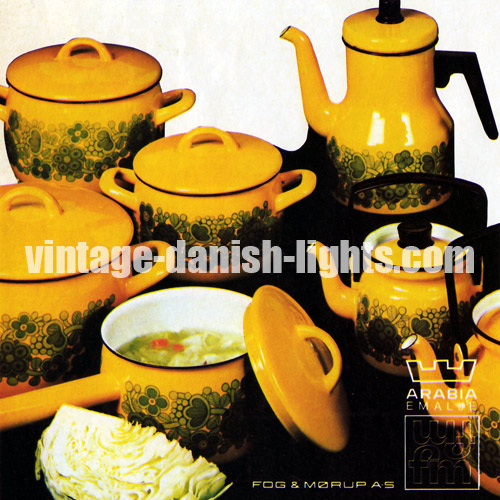
    Fog Morup Arabia Kalas

    In 1974 a new, more colourful range of F&M/Arabia kitchenware was launched (pictured above), entitled Kalas and produced initially in yellow, red and green, and later also in brown. “Arabia enamel,” the advert said, “is like having nature right in through the kitchen door! Arabia is Finnish applied art in bright, clear, natural colours, decorated with beautiful forest flower motifs.” The Kalas kitchenware was accompanied by matching Kalas lights in two sizes (below).

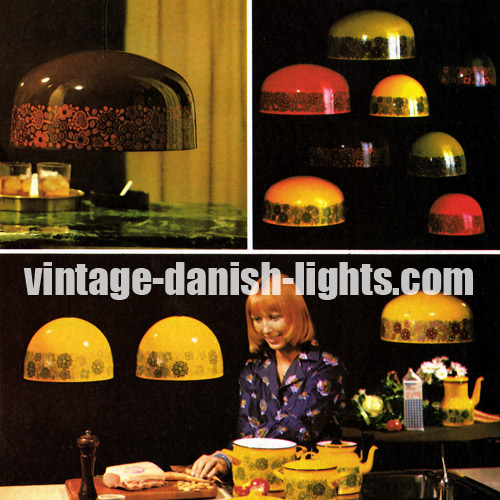
    Fog Morup Arabia Kalas lamps

    Although the Arabia company logo did not appear in the advertisements for the lights, the blurb explained that “F&M has developed an exciting and versatile lamp, inspiration for which comes from the prestigious Finnish Arabia cookware.”

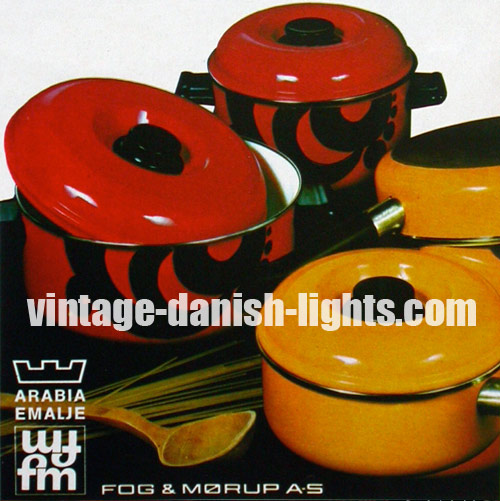
    Fog Morup Arabia Rondo

    Other design variations in both kitchenware and lighting followed, including Rondo (pictured above) in late 1974, described as “a brand new pot series of yellow and red with wonderful – slightly Japanese-inspired – decorations, designed by one of Arabia’s famous Finnish artists”, and Troubadour (pictured below), which appeared around 1976.

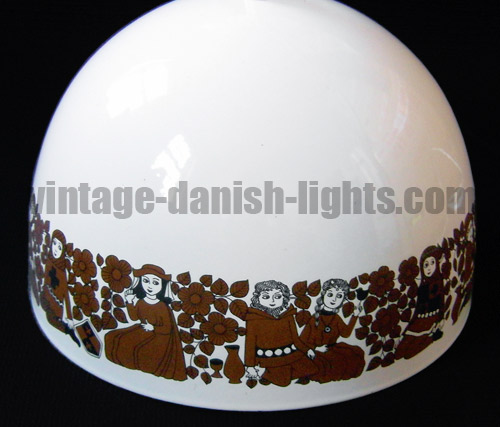
    Fog Morup Arabia Troubadour

    With the designers and decorators of these lines unacknowledged in the advertisements, various members of Arabia’s design team (Raija Uosikkinen and Esteri Tomula among them) have subsequently been proposed as their creators. If anyone has reliable information on the subject we’d love to hear it: please email us at info@vintage-danish-lights.com or click on the title of this blog entry to leave a comment.