Month: May 2010

  • Henningsen & Schwalbe’s Kassablanka

    Henningsen & Schwalbe’s Kassablanka

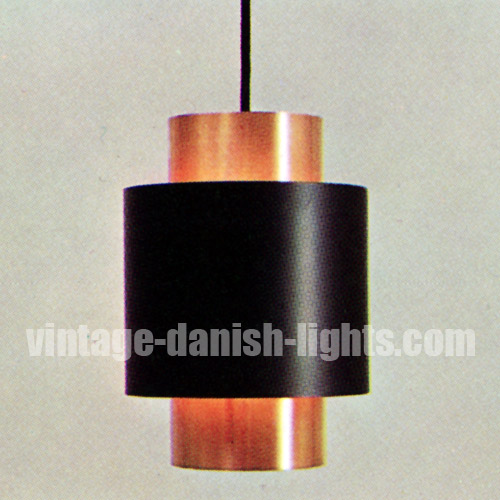
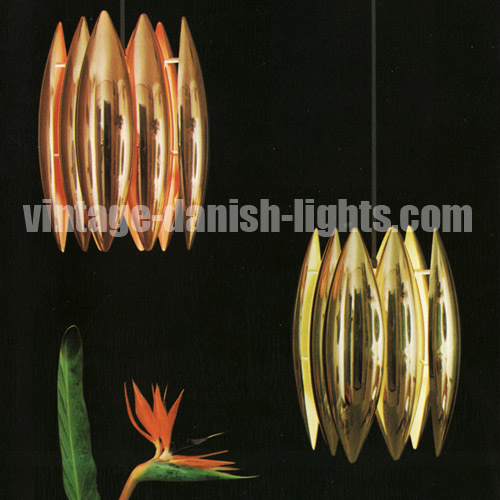
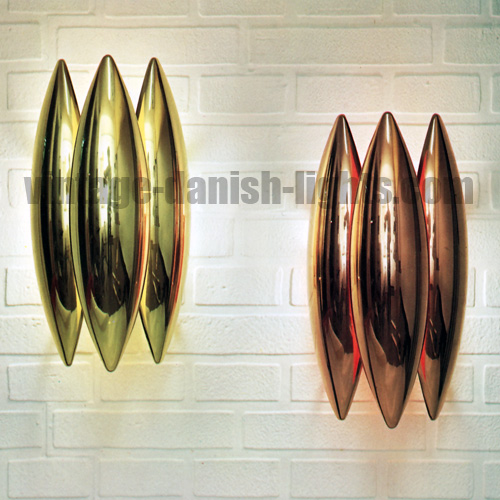
    Constructed from four interlocking cubes with cutouts that allow only indirect light to emerge, Simon P. Henningsen’s Kassablanka pendant light was designed circa 1964 for Lyfa, and the lamp’s name was derived from its box-like form and its shiny brass or chrome metal exterior – “kassa blanka” being Danish for “shining box”. And as Simon’s widow Bente told Sune Riishede when he interviewed her for the profile of Simon Henningsen on our sister site classic-modern.co.uk, the name was also a lighthearted pun on the name of the Moroccan city and Lyfa’s own address at Blanka Road in Copenhagen.

    Two editions of the Kassablanka were produced. The brass edition that went into general production, pictured here, had white interior surfaces on the three outer cubes and a deep red interior on the innermost cube. There was also a special limited edition in chrome, with multicoloured interior surfaces created by Danish artist Ole Schwalbe, which was produced in a run of just 200. Each of the 200 lamps was individually signed and numbered by the artist, who is pictured below (left) together with Simon Henningsen and one of the limited edition Kassablankas.
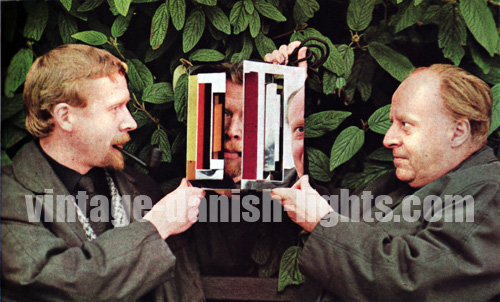
    Lyfa Kassablanka Simon Henningsen Ole Schwalbe

  • The 1970 launch of F&M’s Formland

    The 1970 launch of F&M’s Formland

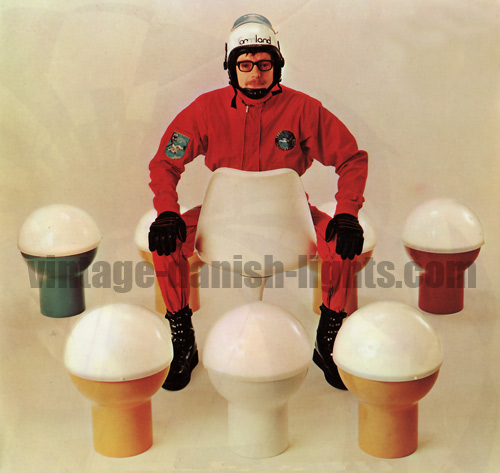
    Bent Rooke’s fascinating Tidsfasetter, a collation of art and design news items from Scandinavia stretching back to the 1960s, includes an article on the launch party for Sidse Werner and Leif Alring’s Formland range for Fog & Mørup in 1970. We have translated the piece from the original Danish.

    Tomorrow at 1.00 pm, Captain CC Smith, chairman of the Danish Parachutists Union, will be presented with an unusual trophy on behalf of the club. The trophy was designed by Sidse and Alring, who at 2.00 pm will launch their new lamp series Formland with pipes and drums at the Fog & Mørup store on Amagertorv [in Copenhagen]. The two talented Danish designers are keen parachutists, and the lamp series is clearly inspired by the sport. The pair have persuaded Fog and Mørup to produce a version of the lamp design in gilded silver, which weighs 2.5 kg and is valued at about 10,000 Danish kroner. The design will also appear as drinking glasses during the launch celebrations, made of beautiful red glass with a “cap” of opaque white plastic. Sidse and Alring have even designed sandwiches especially for this great day! Samples had to be approved at their design studio at 12 Kattesund.

    Sidse Werner Formland

  • Fog & Mørup’s iF Product Design Awards

    Fog & Mørup’s iF Product Design Awards

    Initiated in 1953, the International Forum (iF) Product Design Awards are presented annually to products deemed by its jury of international experts to meet the evaluation criteria for outstanding excellence in design. Fog & Mørup lights that received iF Product Design Awards in the 1960s and 1970s were:


    Jo Hammerborg Tunika

    Hans Due Formel

    • 1976 Linie 1 & 2 fluorescent tube fittings, design K Stellfeld
    • 1977 Radius III (below), design E Balslev

    E Balslev Radius III

  • Preben Dal: mystery man of lights

    Preben Dal: mystery man of lights

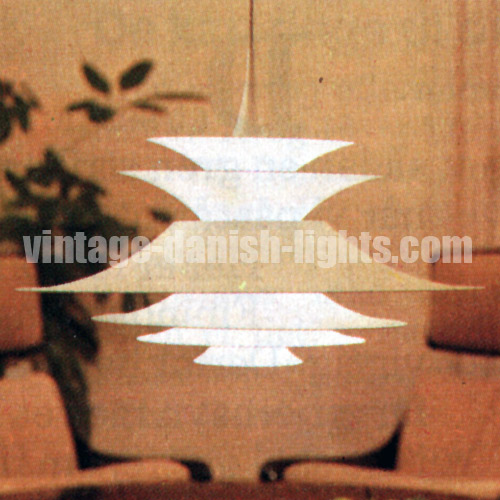
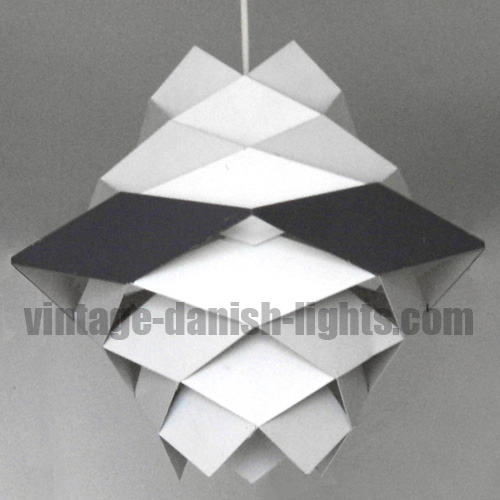
    Just who was Preben Dal? Nobody seems to know anything about the man who designed the wonderful Symfoni series of lights for Hans Følsgaard A/S (see example below, often wrongly attributed to Simon Henningsen or Louis Weisdorf for Lyfa), and many people are even uncertain how to spell his name.

    Preben Dal Symfoni

    Is it Preben Dal or Preben Dahl? This at least we can throw some light upon. An advertisement in a 1960s copy of Mobilia reveals the spelling to be Dal rather than Dahl, and also provides us with further proof of his design genius in the form of another of his lights, untitled but again produced by Hans Følsgaard A/S.

    Untitled Preben Dal light

    Our friend and research partner Sune Riishede tells us that Dal was in a partnership with Danish architect Ole Bang from 1959 to 1976, and that his publications included a pamphlet about Greek temples in 1957 and Fritidshuset, an architectural book about holiday homes, in 1969. Beyond these tantalising snippets of information, however, Preben Dal remains invisible and apparently unknowable.

  • Art and design at Fog & Mørup

    Art and design at Fog & Mørup

    Creativity in design was the core value at Fog & Mørup during Jo Hammerborg’s reign as head of design from 1957 to 1980. This was reflected in the company’s motto:

    There is room for talent with a message in style, architecture and design. Presented with a challenge, designers as individuals or in design groups will achieve their finest work – designs based on a real need, fitting naturally into the modern setting, not artificially created. The result is something the company, in conjunction with the designer, can develop for wider use.

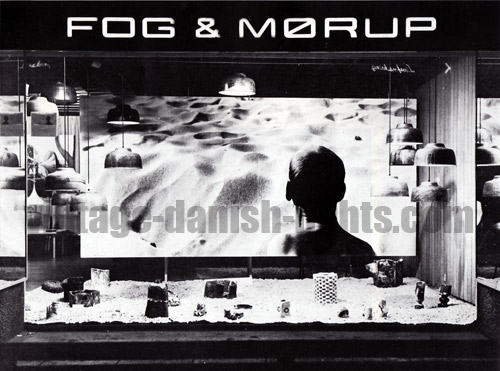
    The creative heart of F&M was also expressed in the shopfront windows of its Amagertorv, Copenhagen store, where designers were offered the opportunity to “give their imaginations full rein”. The image below shows an early 1970s exhibition by artist and designer Henning von der Osten.

    Fog and Morup store at Amagertorv Copenhagen

  • Did Lyfa light the Sydney Opera House?

    Did Lyfa light the Sydney Opera House?

    We know that Lyfa produced the lighting for some important buildings during its existence, including Arne Jacoben’s Aarhus town hall – a commission that it won by undercutting Louis Poulsen and offering to produce the lights free of charge! But could it be that the company was involved in what some might consider an even more prestigious project?

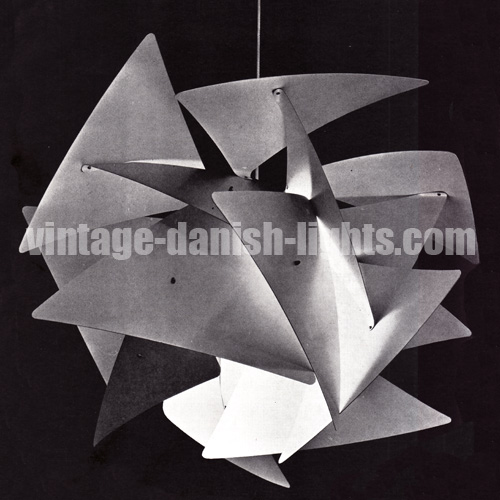
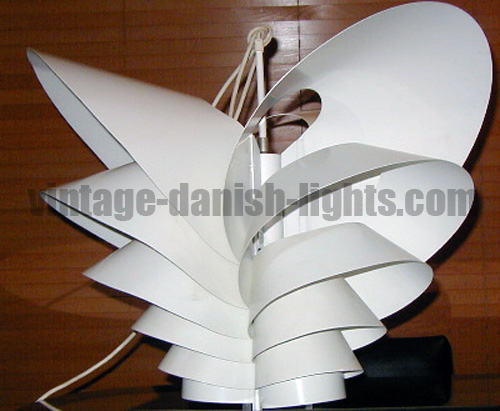
    A few years ago we received an email from someone wondering whether we could identify a very large light he’d bought. It was made of metal sheets bent like sails, he told us, had a Lyfa label on it, and measured approximately 53cm high and about 70cm at the widest point at the top. He enclosed some snaps including the one below.

    Mystery Lyfa light

    We had no record of such a light, but its large scale suggested that it might have been produced for a specific, non-domestic building. Rotating the picture about 45 degrees we were struck by its likeness to the Sydney Opera House, and suggested that as a starting point for research.

    Interestingly, our correspondent replied that Australia was in fact where he had found the light. But as far as we know he has to date been unable to establish any connection with the Opera House despite subsequently featuring the light on Australian tv programme Show and Tell, in which experts attempt to identify antiques, and the question remains unanswered.

    If anyone can reveal anything at all about this intriguing Lyfa light, do let us know by leaving a comment (click on the title of this post and scroll down the page for the comments form) or by email.

  • A dangerous time for lights

    A dangerous time for lights

    The most perilous time in a vintage lamp’s lifecycle starts when it leaves its original home – where the worst it’s likely to have suffered is a layer of dust, a few spots of ceiling paint and a coating of cigarette smoke. As it embarks upon the journey towards its next long-term installation it’s at risk of being bashed, scratched, exposed to damp, or even losing some of its parts.

    Although a growing number of antique/second-hand dealers and charity/recycling shops do treat such lamps with the respect they deserve, many others are still piling them high in a tangled jumble without a care for their well-being. And a sad destiny awaits those that end up in one of the farmers’ barns that double as part-time junk shops if they don’t sell quickly – rust will set in and eat them alive. They will be lucky to escape without damage. Fortunately and perhaps surprisingly, many do.


    Second-hand shop in barn

  • Safari is by Hvidt, Hvidt & Mølgaard

    Safari is by Hvidt, Hvidt & Mølgaard

    Nordisk Solar Compagni’s Safari pendant light, pictured below, is often attributed to Jørgen Gammelgaard. But it was actually designed in the 1970s by engineer Christian Hvidt together with his architect father Peter Hvidt (1916–1986) and his father’s business partner at Hvidt & Mølgaard Design, Orla Mølgaard (aka Orla Mølgaard-Nielsen) (1907–1993). In 1981 they were jointly awarded an iF Product Design Award for the light.

    Hvidt & Mølgaard Design are best known for their furniture – notably the Ax chair, designed in 1950 for Fritz Hansen, and the 1956 Boomerang chair for France & Son – but they also created several lamps for Le Klint.

    Safari Hvidt and Molgaard Design

  • Kastor is Hammerborg, not Weisdorf

    Kastor is Hammerborg, not Weisdorf

    The lights pictured below have often been attributed to Louis Weisdorf for Fog & Mørup. The truth is that Louis Weisdorf never designed lights for F&M at all, and the lights – entitled Kastor – were created by F&M’s head of design Jo Hammerborg. The pendant version of the Kastor first appears in the company’s marketing materials for 1969. The wall lamp version was a later addition, issued in 1971.


    Jo Hammerborg Kastor

    Jo Hammerborg Kastor

  • Is this why Danes love lights?

    Is this why Danes love lights?

    With a population of less than 5.5 million, Denmark surely produced more lights per head in the 50s, 60s and 70s than anywhere else in the world. Many were made for export, but vast numbers were sold within the country, reflecting the importance that was (and still is) placed upon lighting in ordinary Danish homes.

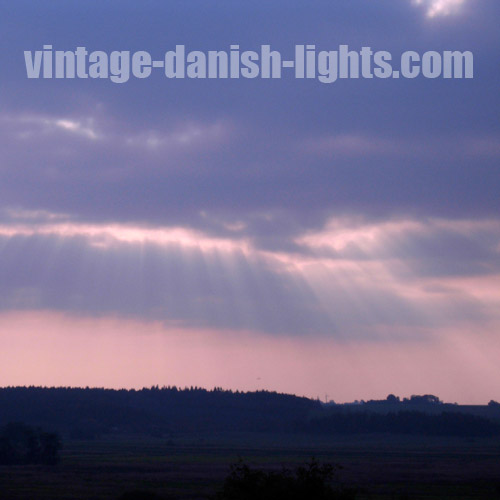
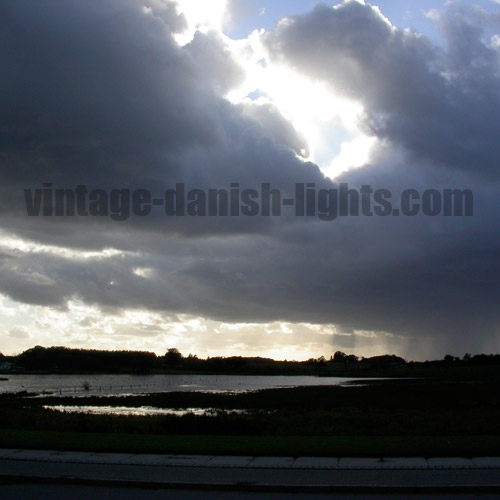
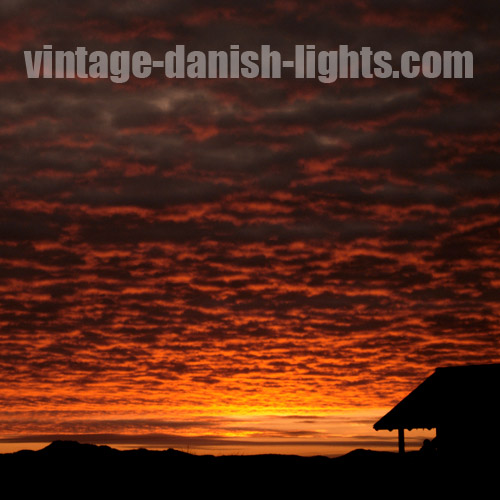
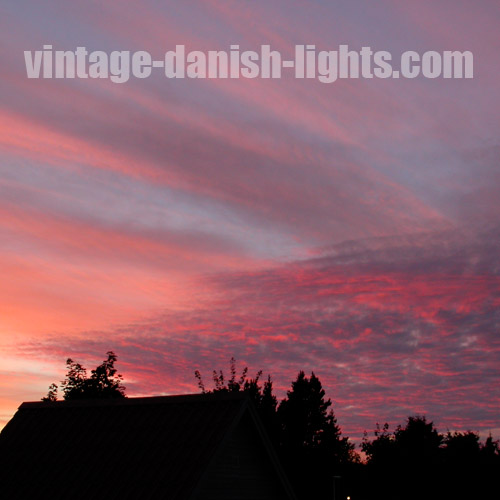
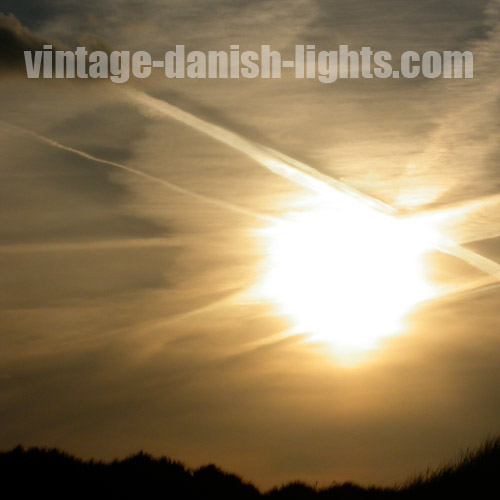
    As regular visitors to the country, we have an entirely unprovable theory about the reason for this special emphasis. We believe that the dramatic effects in light and shade that result from Denmark’s huge skies, open landscapes and northerly position cause its inhabitants to be acutely aware of the powerful impact of lighting and its ability to define an environment.

    In support of our thesis we offer a handful of the many Danish sky snaps we have taken over the years.


    Danish sky

    Danish sky

    Danish sky

    Danish sky

    Danish sky