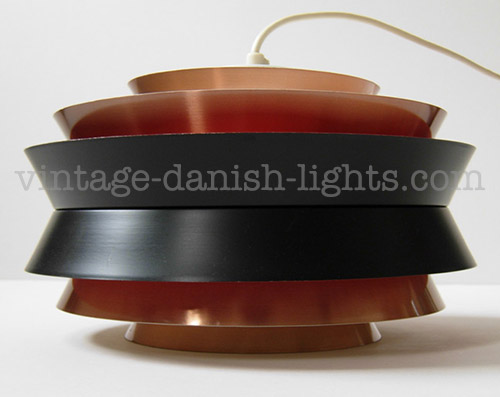
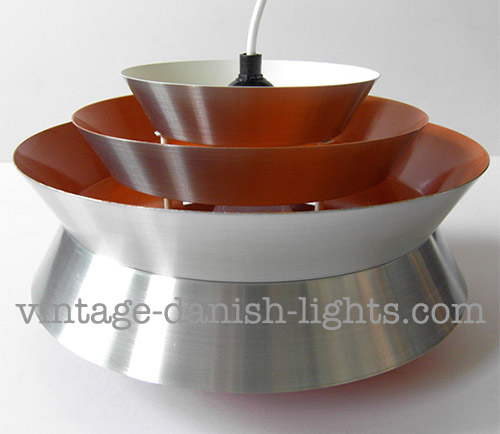
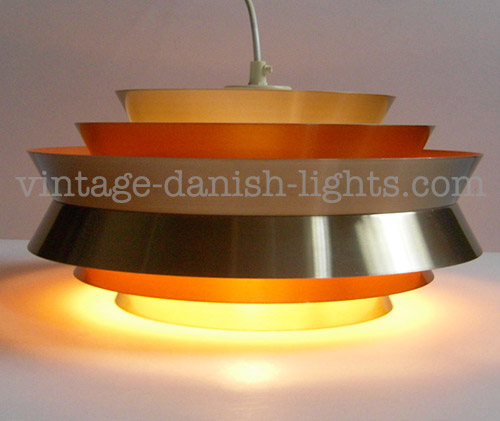
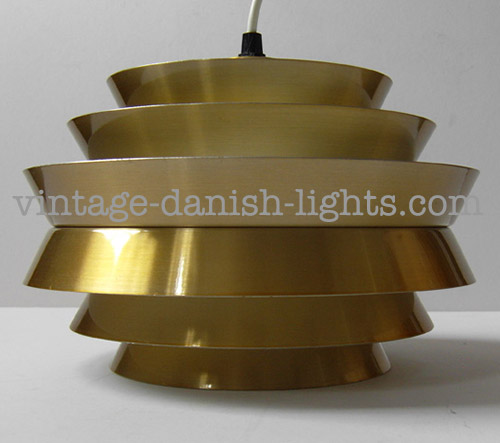
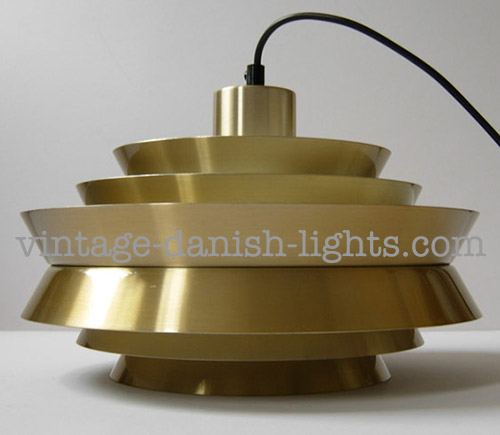
One of the features that has driven the increasing popularity of 60s and 70s Fog & Mørup lighting as a target for collectors – along with the consistently high quality and design excellence of the individual lights themselves and the cohesiveness of the F&M brand as a whole during this period – has been the fact that (with the exception of the Semi) the lights have never been reproduced. This has given the lights a scarcity value and has made them attractive to new collectors, who have not needed to study up on subtle historical design and production changes to be sure that they are buying a vintage model rather than one made last year.
But this is soon to change, as a little bird tells us that a number of Jo Hammerborg’s Fog & Mørup light designs are to be reproduced, with the first of them due to become available within months. We expect a big shake-up in the market for vintage Hammerborg lights to follow.
The precise effects that the arrival of these new productions will have on the vintage market will depend on several factors, amongst them the degree to which they match the quality standards of the originals and whether any aspects of the designs have been changed to accommodate modern production methods and materials and/or perceived changes in public tastes.
If the new lamps are similar in appearance and quality to the originals, one effect may be a drop in demand for originals that are in less than excellent condition, as a proportion of the buyers who currently purchase Hammerborg designs purely for their aesthetic and functional qualities (and not as collectables) opt for new versions in preference to substandard originals. Lamps with visible dents, scratches or rust, with missing parts such as anti-glare louvres or acrylic plates, or that have been subjected to repainting are all likely to become relatively less attractive to these buyers. Those in the very best condition, meanwhile, are likely to hold or increase their value as awareness of the lights is brought to a wider audience, a proportion of whom will seek out originals that will maintain their value rather than buy a reissue.
On the other hand, if the reissued lamps differ significantly from the originals in quality and/or design features, the effect they might have on the vintage market is harder to predict. While awareness of Hammerborg lamps amongst the general population may grow, the understanding of what buyers expect individual lights to look and feel like may become less clear-cut. Buyers with access to both old and new versions (who will of course tend to be those based in Denmark) may compare the two and choose to purchase vintage originals, leading to a local boost in the vintage sector. But for the wider international market, where people are less likely to have the opportunity to experience both versions “in the flesh”, a poorer-quality reissue may lead those who come across it to have a distorted understanding of the high quality standards of an original F&M production.
While we wait to see what actually emerges from this new project, we have been speculating amongst ourselves about the identity of the first Hammerborg light to be reissued. Want to join the guessing game? Take part in our poll!