When people come across a vintage Panthella for the first time they often think there’s something wrong with the on/off switch. “It’s not working properly”, they say. “I have to step on it twice to bring the light on, and twice again to turn it off.”
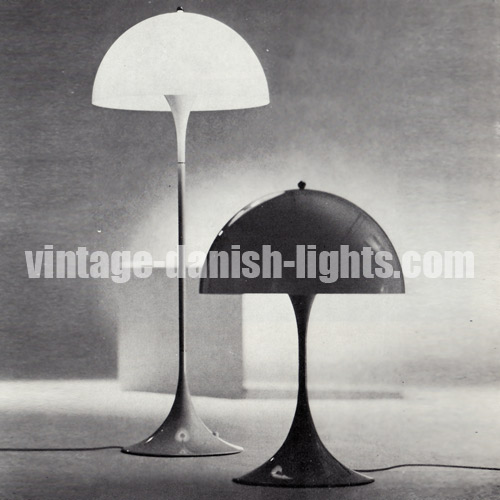
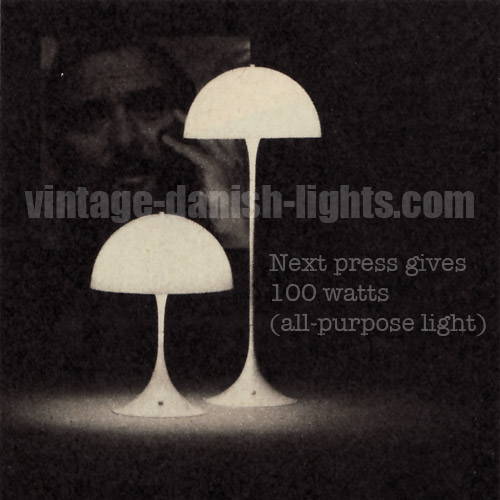
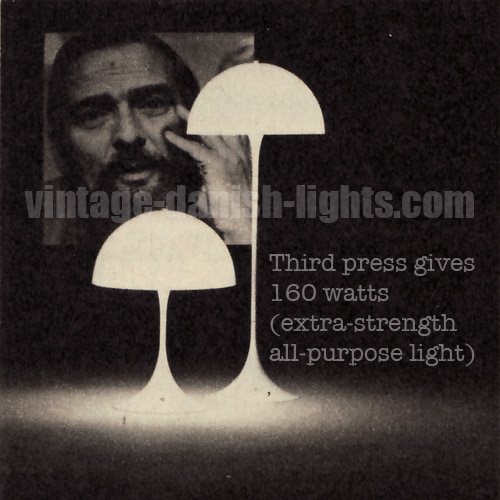
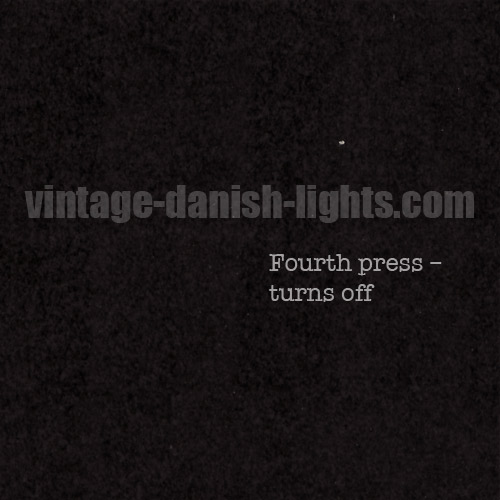
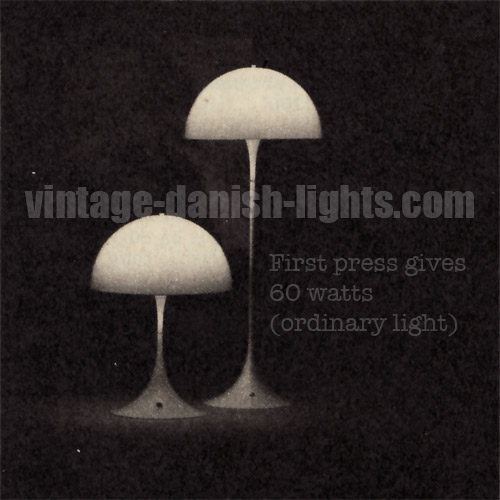
In fact, the four-step Panthella switch is a feature and not a bug! While later productions of this classic Verner Panton lamp have a standard two-step on/off switch housed a little way along the electric cable, the switch in the original design was a small button elegantly incorporated directly into the curve of the base, and its complex functioning was a key feature of the lamp.
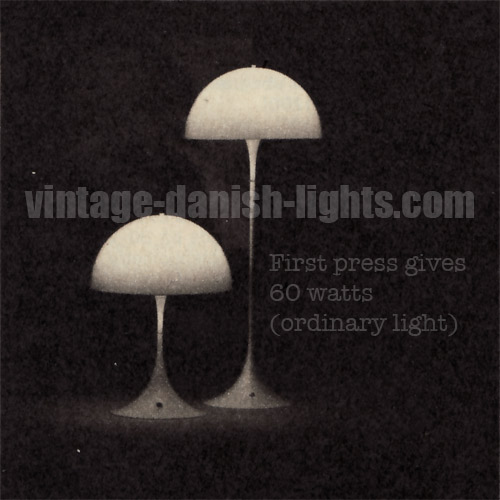
Indeed, the lamp was introduced by its producer Louis Poulsen in 1971 as the Panthella/3-lys (Panthella/3-light). It required the use of a specially-designed bulb – hence its apparently strange behaviour when a standard bulb is used. A Poulsen advertisement, which we have translated from the original Danish, described the lamp as follows:
Verner Panton has created a new lamp. We’ve called it Panthella/3-light. It is no ordinary lamp, because with only one filament it has three levels of intensity: 60, 100, 160 watts. You press the button – with the hand or a foot – one, two or three times. Fourth time off. It’s quite simple. Panthella 3-light is not only new technology, it is functional design, and is simple and beautiful in form. Panthella is made of white plastic, so is easy to move around. The low Panthella is 68cm high, and many will use it as a table lamp. The high Panthella is 120cm tall, and designed to stand on the floor.
Month: August 2010
-
Verner Panton’s Panthella/3-light
-
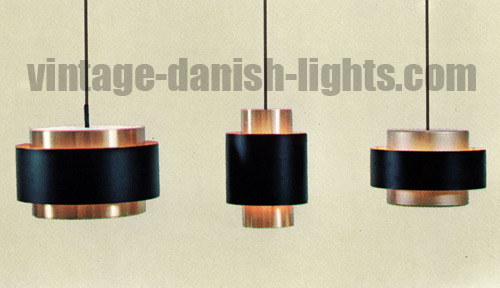
Jo Hammerborg’s Saturn series
One particular group of Fog & Mørup lights by Jo Hammerborg – which for convenience here we will call the Saturn series – embodies Hammerborg’s most easily recognised and most widely imitated design concept.
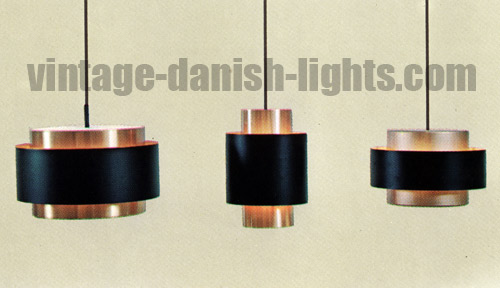
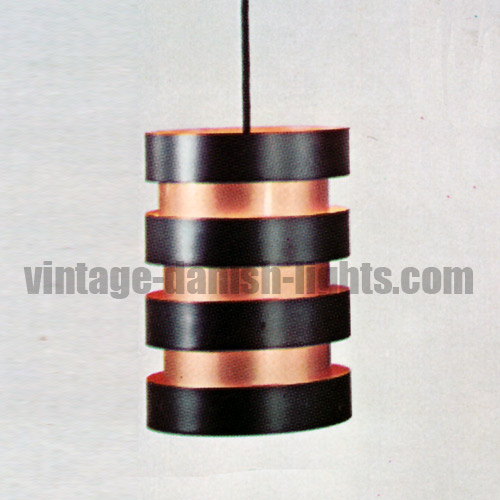
The basic Saturn series concept was a structure of two concentric cylindrical bands, and Hammerborg explored this form in many varying proportions of height and width. Early 1960s examples, mostly in copper and black laquered metal, included (pictured above left to right) the Saturn itself, the Tunika and the Juno, the Dano (pictured below) and the Eiffel (pictured following the Dano).
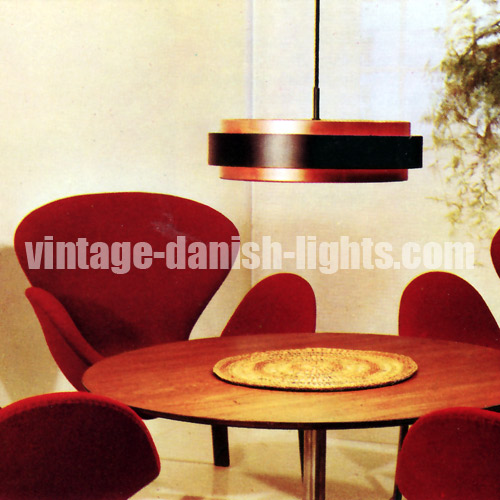
Other examples included the Etna, the Zenith, and the Corona – in which the core became conical in form instead of cylindrical. Variations in colour extended as far as the bright single-coloured Rainbow Line Junos of the late 60s and early 70s, and the concept remained one of Hammerborg’s signature themes throughout his two decades of design work at Fog & Morup.
-
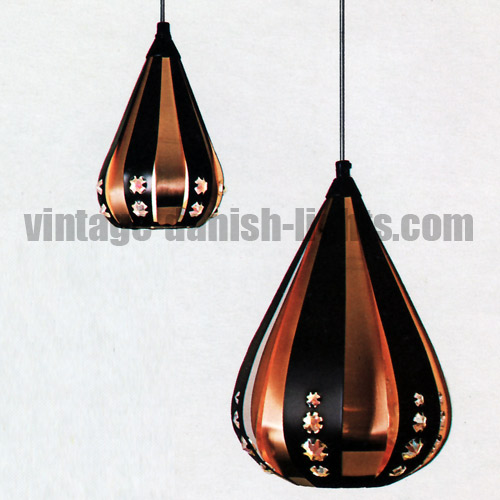
Coronell, not Hans-Agne Jakobsson
It has been brought to our attention that, in one of the misinformation feedback loops so common on the internet, sellers on Swedish auction site tradera.com have been in the habit of describing the lights pictured below as the work of Sweden’s Hans-Agne Jakobsson.

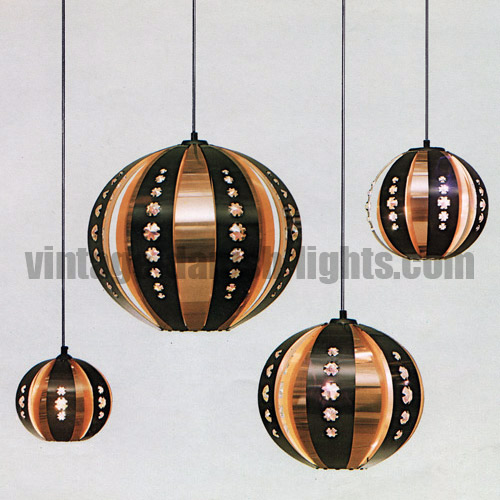
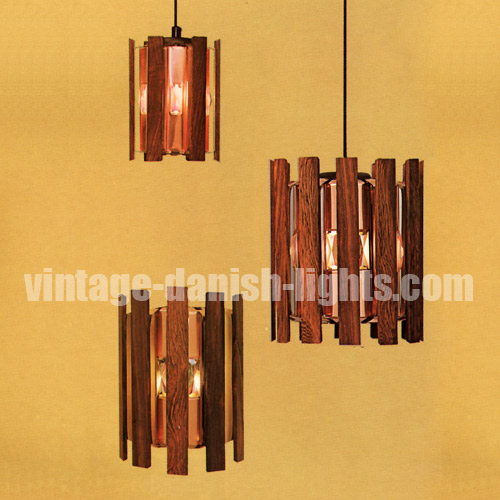
In fact all these lights were made in the 1970s by Coronell of Denmark. The February 1973 catalogue in our possession gives the titles and dimensions of the lamps as follows. Top picture, left to right, P12 PB2 (diameter 12cm, height 19cm), P112 PB2 (diameter 20cm, height 29cm). Middle picture, clockwise from top left, P33 PB2 (diameter and height 40cm), P26 PB2 (diameter and height 24cm), P32 PB2 (diameter and height 30cm), P14 PB2 (diameter and height 16cm). Bottom picture, clockwise from top left, P15 PB3 (diameter 13cm, height 17cm), P24 PB3 (diameter 21cm, height 25cm), L21 PB3 (diameter 17cm, height 25cm).
-
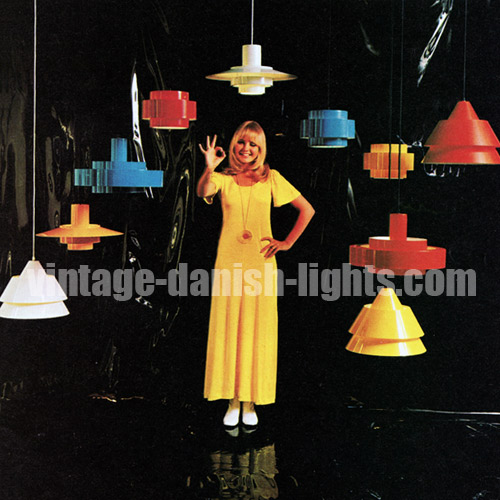
Fog & Mørup’s 1969 Rainbow Line
In 1969 four Fog & Mørup light models – Andreas Hansen’s Falcon and Jo Hammerborg’s Juno, Zone and Equator – were brought together in vibrant red, yellow, blue and white versions to form the Regnbue Linie (Rainbow Line) series.
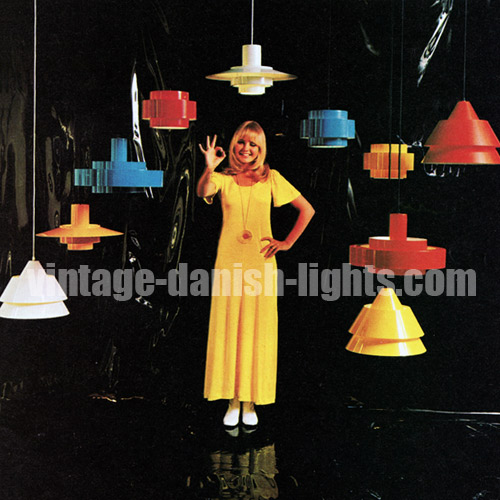
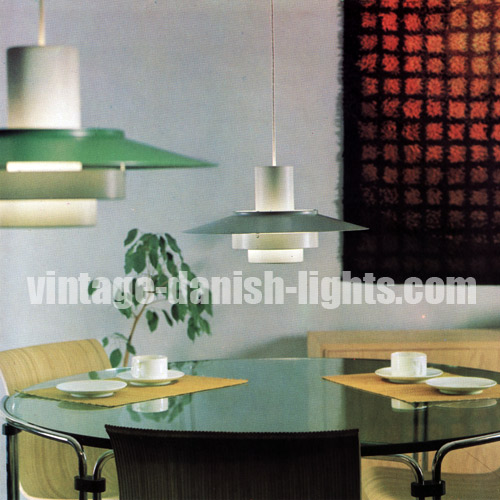
The conical Zone was the only completely new issue in the series, the Equator having been available since the previous year, while Hansen’s Falcon had been around in muted two-tone versions (pictured below) for some five years, and Hammerborg’s Juno – the oldest member of the Rainbow Line series – had first appeared in the early 1960s as part of an extensive line of copper and black lights with a shared banded shape in varying proportions of height and width which included the Saturn.
-
‘Tivoli’ wall light is by HS, not SH
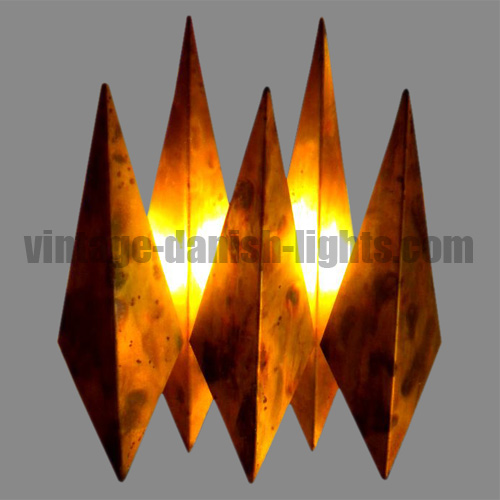
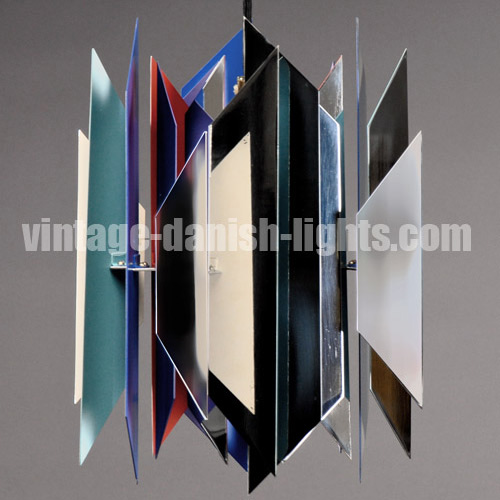
The designer of the diamond-shaped wall light pictured below is often said to be Simon P Henningsen. Both this raw metal version and another lacquered in black and white are, it is claimed, entitled Tivoli and were produced by Lyfa. But all three of these assertions are actually incorrect. The wall light is in fact by Holm Sørensen, the company founded by Sven Aage Holm Sørensen to produce his own designs. The light designed by Simon Henningsen, produced by Lyfa and popularly known as Tivoli (though its proper title is Divan 2, after the name of the restaurant in Copenhagen’s Tivoli Gardens for which Henningsen created it) is pictured beneath the Holm Sørensen light. (Holm Sørensen image courtesy of Sune Riishede.)
-
Jo Hammerborg’s Penta is not a PH 4/3
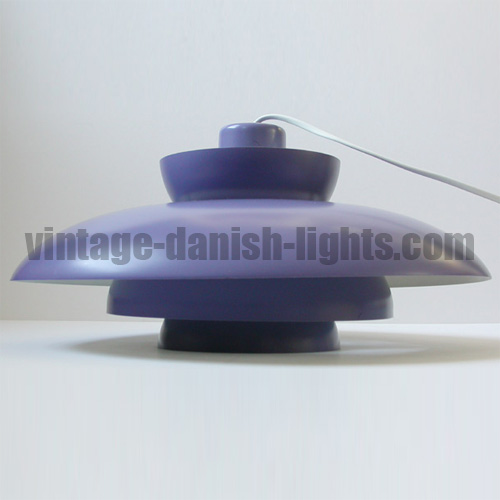
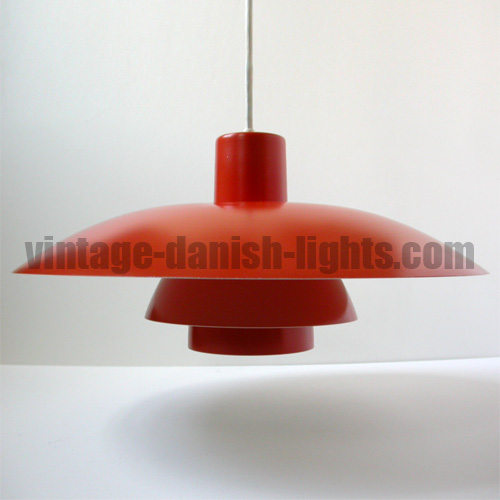
The Penta, pictured below, is a little-known Fog & Morup light designed by Jo Hammerborg and first appearing in the record in 1965. More traditional in form and rounded in shape than most other Hammerborg designs of the period, the light is rarely recognised for what it is and is frequently attributed to Poul Henningsen for Louis Poulsen, often being mistaken specifically for Henningsen’s PH 4/3, pictured in orange here following the lilac Penta.
-
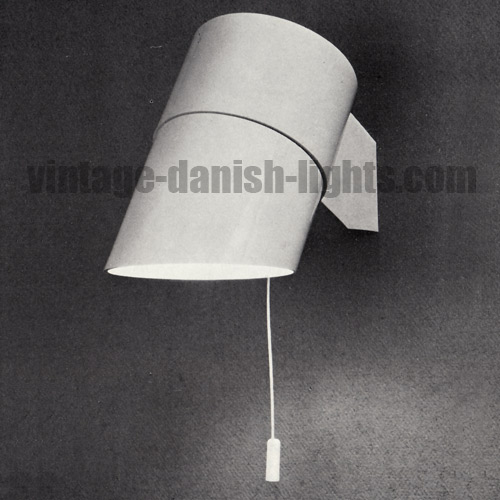
13 of 100 great Danish designs of 1974
In 1974 a special edition of Mobilia magazine was dedicated to showcasing, as the title of the issue announced, “One Hundred Great Danish Designs!” The 100 featured products were chosen as “up-to-the-minute examples of Danish industry”. “Each of these products,” the magazine’s editorial explained, “in its own way and on its own terms combines reasonable proportions of economy, function and aesthetics.”
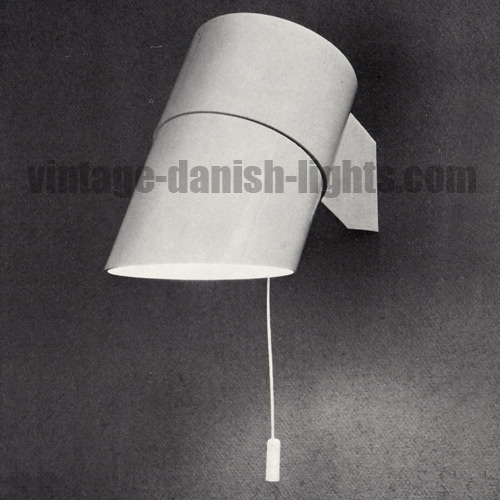
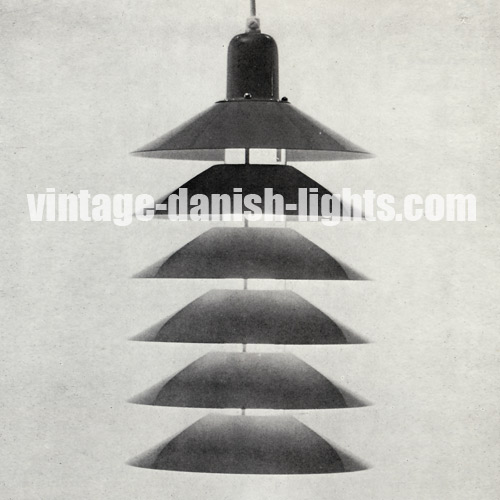
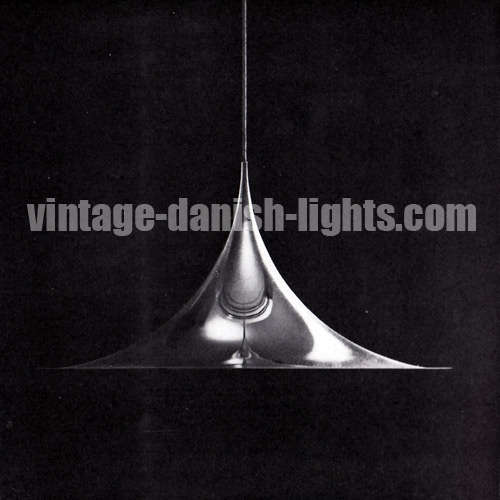
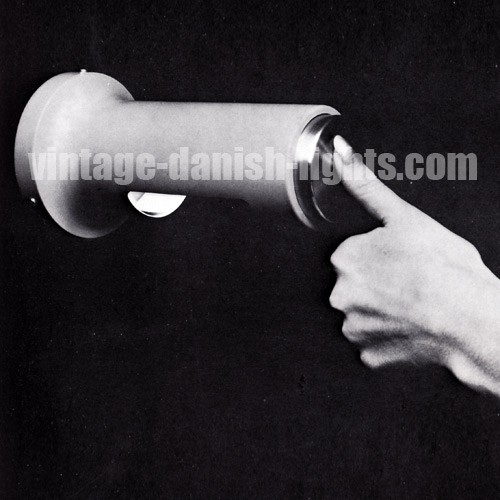
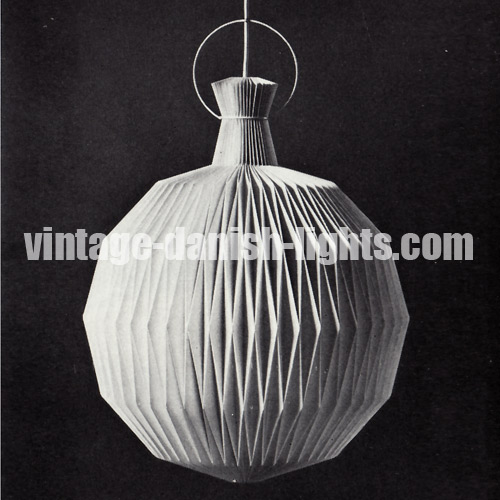
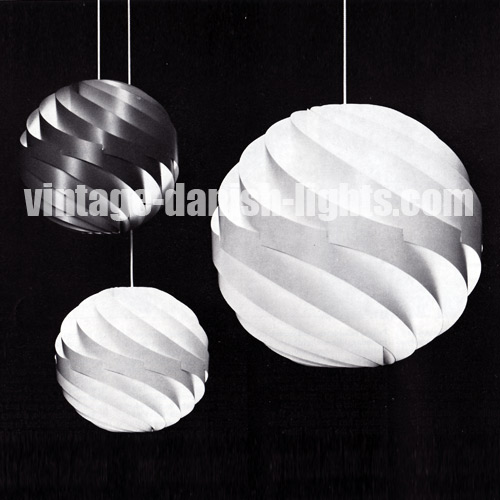
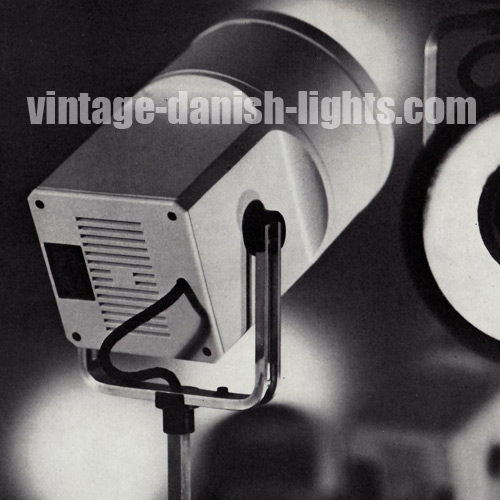
Among the 100 products were 13 lights: Sven Middelboe’s Night-cap for Nordisk Solar Compagni (pictured above), and, in order of appearance below, Jørgen Gammelgaard’s Tip-top for Design Forum A/S, two Fog & Mørup lights – Claus Bonderup & Torsten Thorup’s Semi and Peter Avondoglio’s Contact, the Fruit lamp by Kaare Klint for his brother Tage’s company Le Klint, Louis Weisdorf’s Turbo for Lyfa, Verner Panton’s Panthella for Louis Poulsen, and Poulsen’s in-house design the Unispot. Also among the 13 (but not pictured here) were G Biilmann Petersen’s Le Klint table lamp and another four Louis Poulsen lights – Poul Henningsen’s PH 5, Kontrast and PH 80, and Jens Møller-Jensen’s Albertslund outdoor lamp.