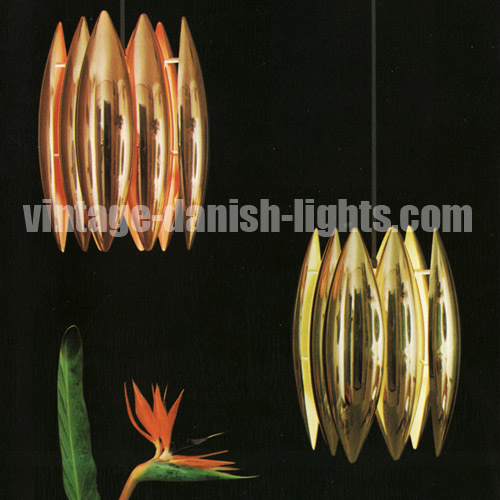
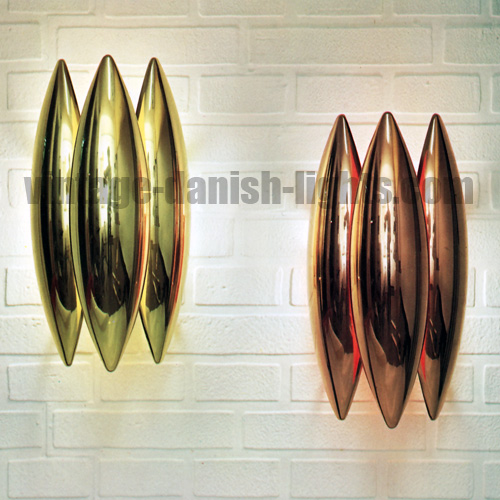
Constructed from four interlocking cubes with cutouts that allow only indirect light to emerge, Simon P. Henningsen’s Kassablanka pendant light was designed circa 1964 for Lyfa, and the lamp’s name was derived from its box-like form and its shiny brass or chrome metal exterior – “kassa blanka” being Danish for “shining box”. And as Simon’s widow Bente told Sune Riishede when he interviewed her for the profile of Simon Henningsen on our sister site classic-modern.co.uk, the name was also a lighthearted pun on the name of the Moroccan city and Lyfa’s own address at Blanka Road in Copenhagen.
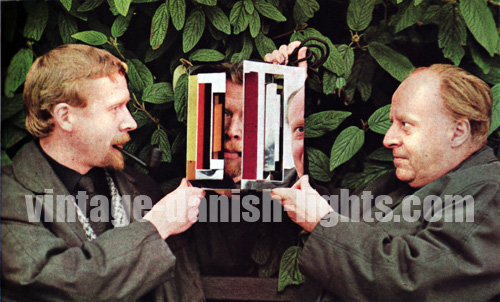
Two editions of the Kassablanka were produced. The brass edition that went into general production, pictured here, had white interior surfaces on the three outer cubes and a deep red interior on the innermost cube. There was also a special limited edition in chrome, with multicoloured interior surfaces created by Danish artist Ole Schwalbe, which was produced in a run of just 200. Each of the 200 lamps was individually signed and numbered by the artist, who is pictured below (left) together with Simon Henningsen and one of the limited edition Kassablankas.